Types of Vitiligo
The way vitiligo presents itself depends on several factors: the number of patches, where they appear on the body, and how they evolve over time. Based on these distinct characteristics, the condition can be understood through 8 different types and patterns.
Focal Vitiligo
is a localized form of the condition characterized by just a few small, isolated patches that remain confined to a single specific area without spreading.
Because these patches typically stay stable and do not follow a symmetrical pattern, this type is often considered a distinct, limited variation of vitiligo.


Segmental Vitiligo
is a less common form of the condition that typically appears in children and teenagers, characterized by patches that develop on only one side or a specific section of the body.
Unlike other types, it spreads rapidly for a brief period before permanently stabilizing, often causing the hair in the affected area to turn white.
Zosteriform Vitiligo
The word comes from Herpes Zoster (the virus that causes shingles).
Shingles typically breaks out in a distinct, band-like pattern that wraps around only one side of the body, following the path of a single nerve line (called a dermatome). When doctors describe a skin condition as "zosteriform," they mean it behaves or looks like shingles spatially, sticking strictly to one specific nerve path on one side of the body.


Mucous Vitiligo
More accurately called mucosal vitiligo is a type of vitiligo where the loss of skin color occurs specifically on the moist, pink tissues lining the inside of your body—known as mucous membranes.
While vitiligo is famous for causing white patches on the outer skin (like the hands, arms, or knees), mucosal vitiligo affects the transition zones where your outer skin meets these inner lining tissues.
Acrofacial Vitiligo
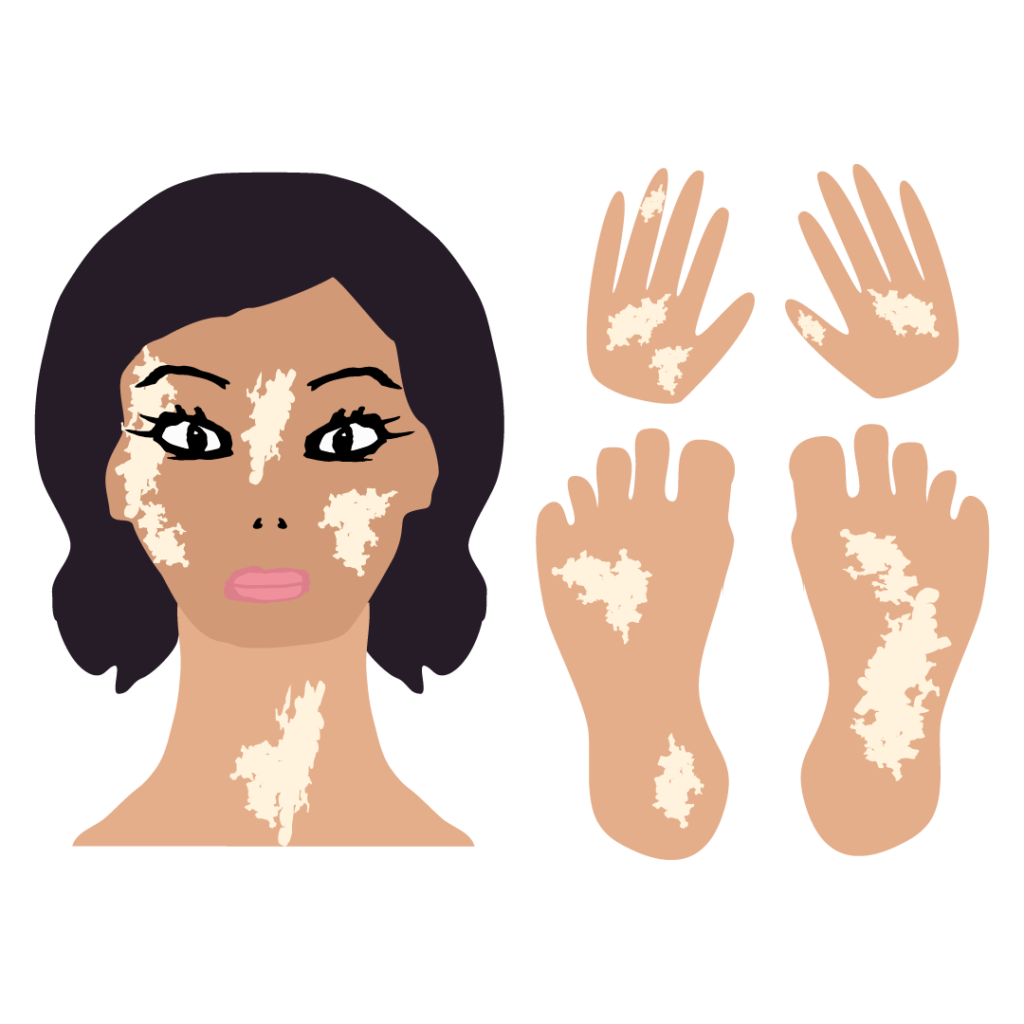
Acrofacial vitiligo is a specific subtype of vitiligo characterized by a symmetrical "lip-tip" pattern, where white patches form strictly on the fingertips, toes, and around the openings of the face (like the mouth and eyes).
While the facial patches often respond well to treatments due to a rich supply of hair follicles, the patches on the hands and feet are notoriously stubborn and resistant to therapy. Over time, it may either remain confined to these specific areas or eventually spread to other parts of the body.
Mixed Vitiligo
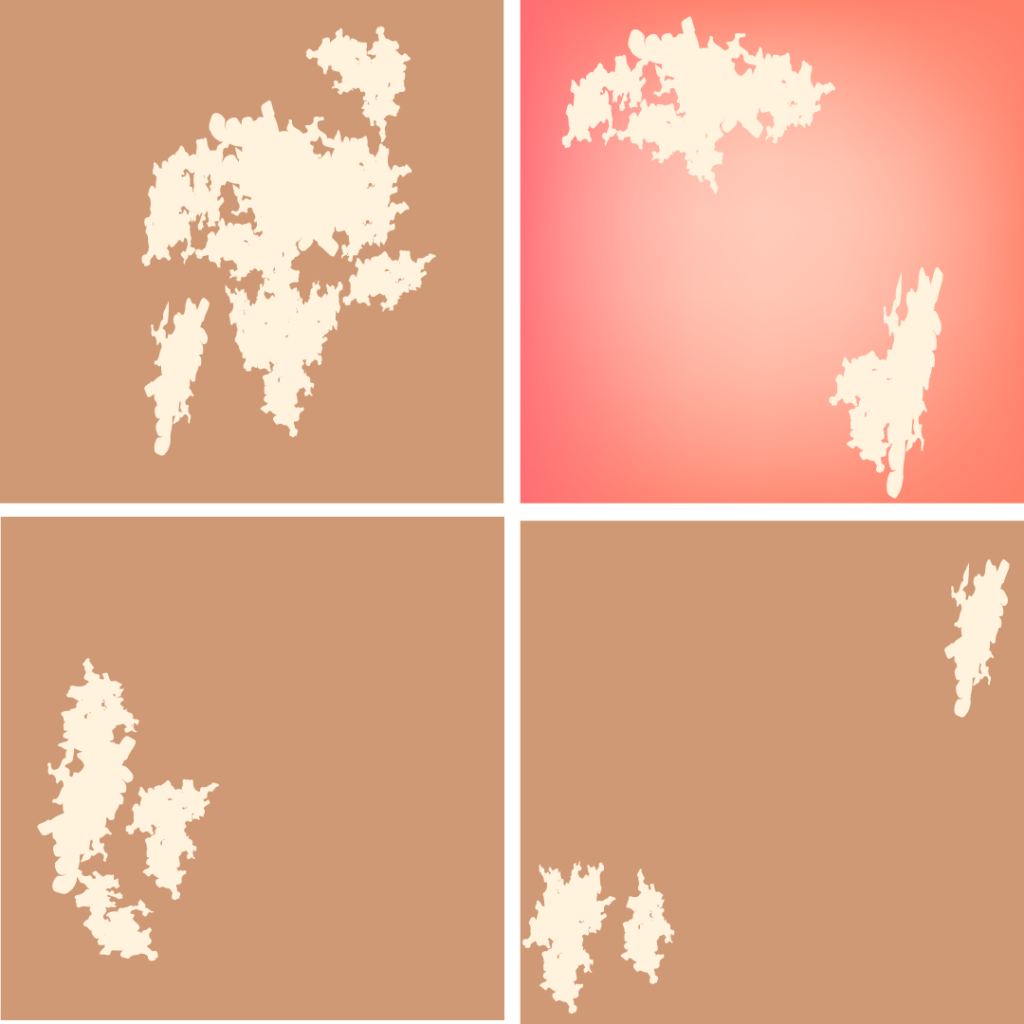
Mixed vitiligo is a rare form of the condition where an individual experiences both segmental (one-sided) and non-segmental (symmetrical) vitiligo at the same time. It typically begins as a localized, one-sided band of pigment loss that spreads quickly and then stabilizes.
Months or years later, a broader immune response triggers new, matching white patches on both sides of the body, such as on both hands or knees.
Because these two types behave differently, the symmetrical patches usually respond well to standard medical or light therapies, while the stubborn, one-sided segment often requires surgical grafting to restore color.
Ordinary Vitiligo
Ordinary vitiligo (medically termed vitiligo vulgaris or common vitiligo) is the most frequent form of the condition, accounting for roughly 90% of all cases. Its absolute hallmark is mirror-image symmetry, where distinct white patches develop progressively and symmetrically on both sides of the body, typically favoring high-friction areas like the hands, wrists, elbows, and knees.
Unlike one-sided types, ordinary vitiligo is an unpredictable, lifelong autoimmune process that spreads in waves, frequently alternating between long periods of complete stability and sudden active flares.


Universal Vitiligo
Universal vitiligo is the most widespread and advanced form of non-segmental vitiligo, characterized by a nearly complete loss of skin pigment across the entire body.
It is clinically diagnosed when depigmentation covers roughly 80% to 90% or more of the body's surface area, frequently extending to the hair as well, turning it white.
This type represents an extreme progression of the body's systemic autoimmune response, leaving only small, isolated patches of the original skin color behind.